

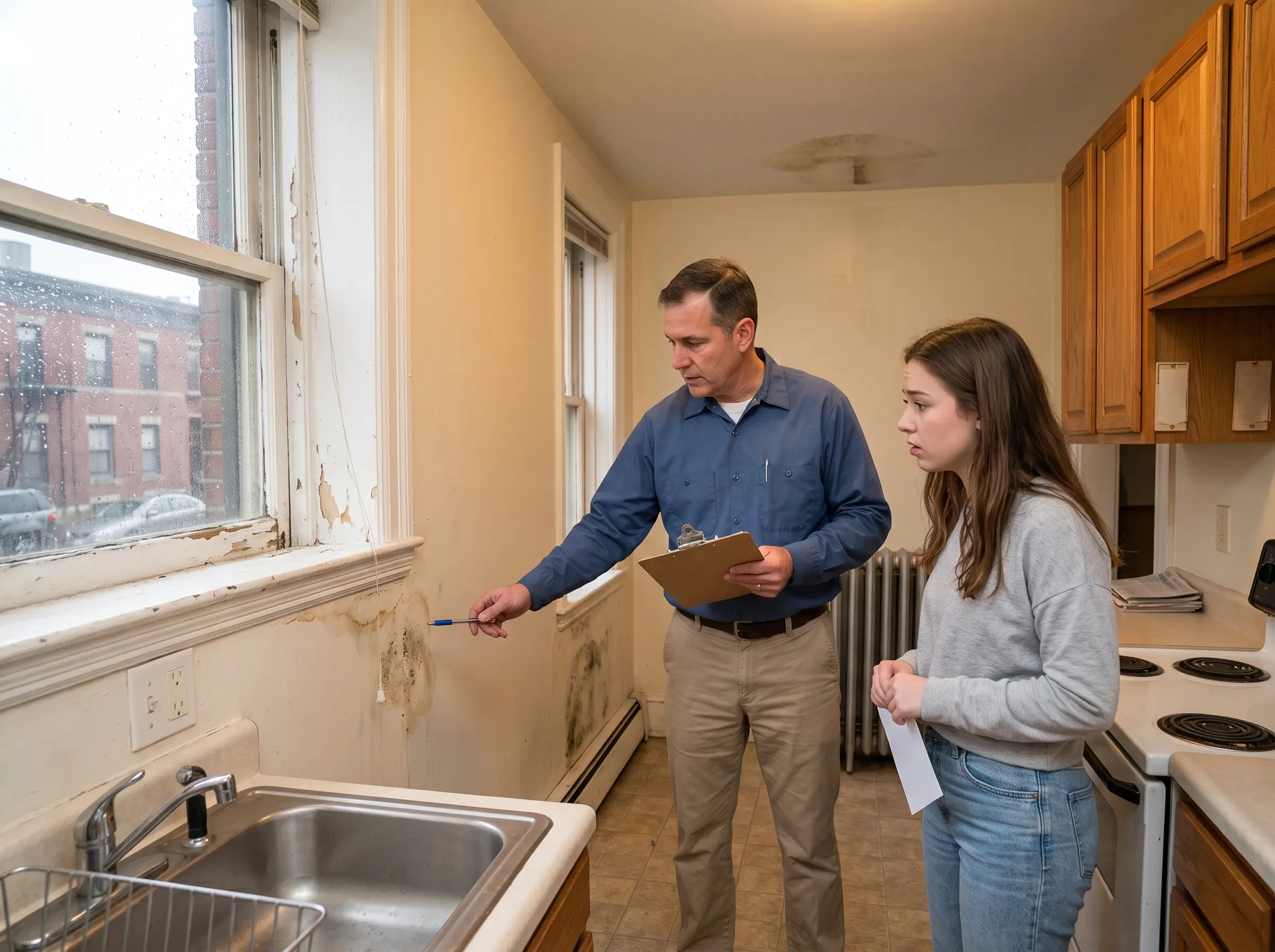
Most failed inspections in Boston start with problems the landlord never saw coming. A small leak hides behind the walls for months. A smoke alarm quietly dies over the winter. These details add up fast in a city with so much old housing.
Forty-four percent of Boston's rental stock was built before 1940. That history gives Boston rental properties plenty of character. It also means many units have aging plumbing. Add the city's inspection schedule, and preparation becomes part of the job.
This guide covers the common issues found during rental property inspections in Boston. It also shows property owners how to get ahead of them.
Key Takeaways
- Boston's older rental stock makes certain violations far more common than in newer cities
- Non-exempt Boston rentals face ISD inspection at least once every five years
- Safety devices, lead paint, heat, and pests top the list of frequent issues
- A proactive walkthrough is the most reliable way to pass on the first try
Why Boston Rental Inspections Uncover So Many Problems
Boston's age is part of its charm. Here are the two main reasons inspectors find issues so often.
Older Buildings Hide Aging Systems Behind the Walls
Many Boston buildings went up long before modern construction codes existed. Original pipes and decades-old heating system equipment wear out slowly. Most of that wear stays out of sight until something fails.
Past renovations add another layer. One owner updates the kitchen. Another patches the basement years later. Over time, the work rarely lines up. Inspectors often spot the gaps where one project ended, and another began.
City Rules Put Every Non-Exempt Unit on a Five-Year Inspection Cycle
Boston requires landlords to register rental units every year. The city's Inspectional Services Department (ISD) runs the program. All non-exempt rental units must be inspected at least once every five years.
Inspectors check each apartment against minimum housing and health standards. Staying aware of these rules keeps compliance simple and protects your investment.
The Most Common Issues Inspectors Find in Boston Rentals
Some violations show up far more than others. Here are the issues Boston landlords should check first.
Missing or Expired Smoke and Carbon Monoxide Alarms
Alarms top almost every inspector's list. Tenants sometimes pull batteries after a false alarm. Others disconnect units entirely and forget to reinstall them.
- Test every alarm at each tenant move-in
- Replace alarms that have passed their expiration date
Massachusetts requires carbon monoxide alarms in most homes with fuel-burning equipment or attached garages. Missing alarms are a quick fail and a real safety risk.
Lead Paint Hazards in Pre-1978 Units
Lead remains one of the biggest concerns in older Boston units. The Massachusetts Lead Law is part of Chapter 111 of the Massachusetts General Laws. It requires owners to address lead hazards when a child under six lives in the unit. That rule still applies when a young family member moves in partway through a lease.
- Watch for chipping paint on windowsills and porch railings
- Obtain a Letter of Compliance once de-leading work is finished
Landlords can be held liable for lead poisoning. That raises the stakes well beyond the inspection itself.
Inadequate Heat During the Heating Season
Boston winters put every heating system to the test. The state sanitary code sets minimum indoor temperatures during the heating season. Units that fall short get flagged quickly.
- Service boilers and furnaces before cold weather arrives
- Check radiators on every floor for uneven heat
Tenants often report heat problems before inspectors do. Quick repairs keep a cold complaint from becoming a violation.
Pest Infestations Like Rodents and Bedbugs
Older triple-deckers and row houses give rodents plenty of entry points. Gaps around pipes and foundation cracks are common culprits. Bedbugs also spread easily between units in shared buildings.
In multi-unit buildings, Massachusetts landlords generally cover extermination costs.
- Seal openings in the basement and along exterior walls
- Schedule regular pest treatments for common areas
Moisture Problems and Mold Growth
A small leak rarely stays small. Worn roof flashing can soak into ceilings for months before anyone notices. By then, mold may already be growing.
- Check under sinks and around tubs for soft spots
- Inspect the basement after heavy rain
Water also creates safety risks. Wet floors in hallways and stairwells increase the risk of slip-and-fall accidents in common areas.
Platinum Realty Group runs detailed pre-inspection walkthroughs on Boston rentals so we can fix violations before ISD arrives. Schedule a property review with our team today.
How Landlords Can Prepare for a Boston Rental Inspection
Preparation turns inspection day into a formality. Start with a walkthrough a few weeks before the inspection date, and treat it like the real thing. Finding major issues early gives you time to hire qualified contractors before rushed repairs drive up costs. Good repair records and clear tenant communication matter just as much.
Here are the steps that make the biggest difference:
- Walk each unit with an inspector's eye: Test outlets and look for missing electrical cover plates. While you're there, check stair railings and treads for looseness.
- Confirm licensing before any repair work: Only let licensed pros handle plumbing or electrical fixes. Unlicensed work can create new violations instead of solving old ones.
- Document every repair: Record dates and keep invoices for each job. These records provide a strong defense if a tenant claims you're liable for an injury or if disputes arise.
- Keep repair records for at least three years: Certain circumstances may call for longer retention. An attorney can give advice on your specific legal responsibilities.
- Give tenants reasonable notice before entry: Massachusetts landlords should send written notice with the inspection date and time window. Many lease agreements spell out the exact terms, and a reminder the day before helps too.
- Share the inspection report: Tenants are entitled to a copy of all inspection reports. Sharing it openly builds trust and keeps everyone on the same page.
Frequently Asked Questions
Q: Can tenants request a housing inspection in Boston?
Yes. Tenants can request an inspection through ISD or by calling 311. These requests happen separately from the five-year cycle.
Q: Are owner-occupied buildings exempt from ISD rental inspections?
Owner-occupied buildings with six or fewer units are exempt from inspection requirements but must still register.
Q: Can landlords meet the inspection requirement without a city inspection?
Yes. Owners can provide passing inspection reports from the Boston Housing Authority or Metropolitan Boston Housing Partnership, or request a Five-Year Alternative Inspection.
Pass Your Next Boston Inspection Without the Last-Minute Scramble
Boston inspections don't have to feel stressful. Most violations come down to routine upkeep and clear maintenance responsibilities. Identify small problems early, and they rarely affect your bottom line. Dealing with them late is where costs and liability pile up.
Managing all of this alone is a lot for one person. That's where professional property management makes renting in Boston much easier. A local property manager knows what inspectors look for. They also know how to maintain compliance year after year.
Keeping a Boston rental code-compliant year-round takes steady maintenance and local know-how. Contact Platinum Realty Group to put your property on a proactive maintenance plan.